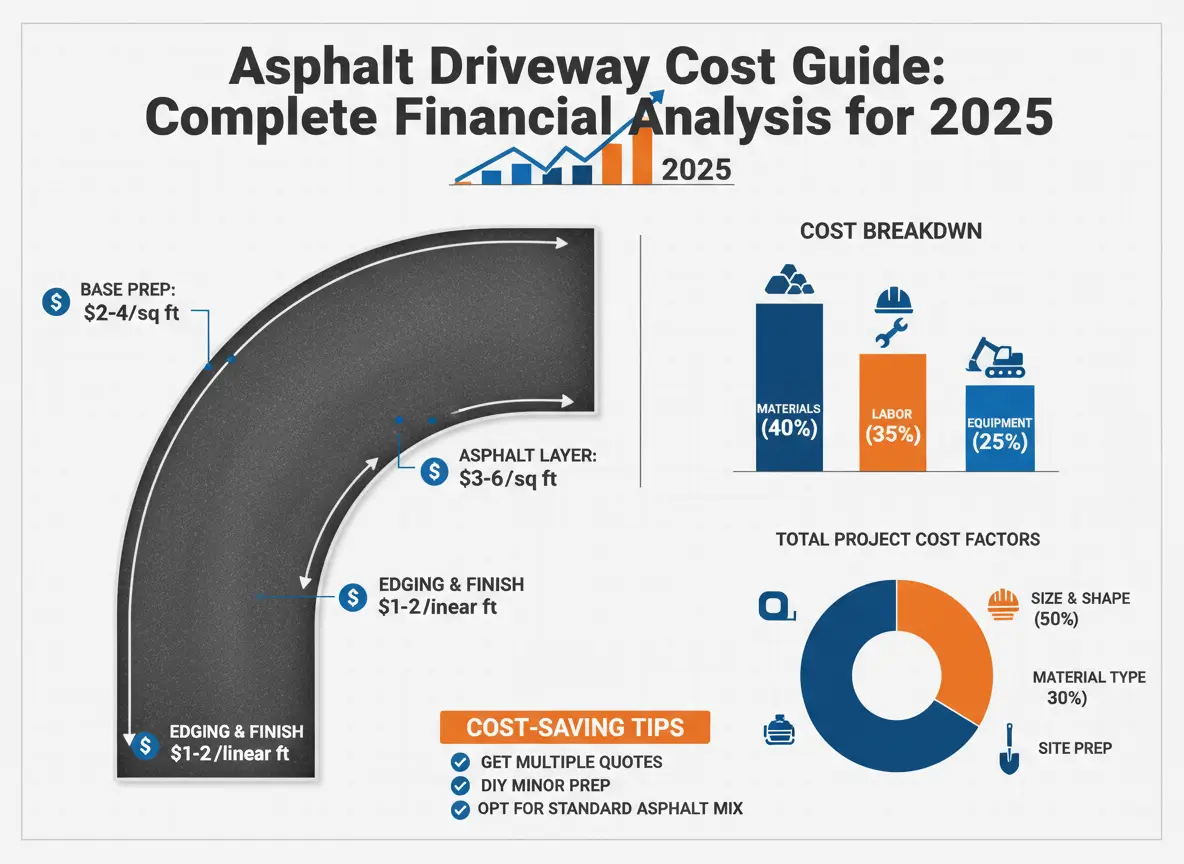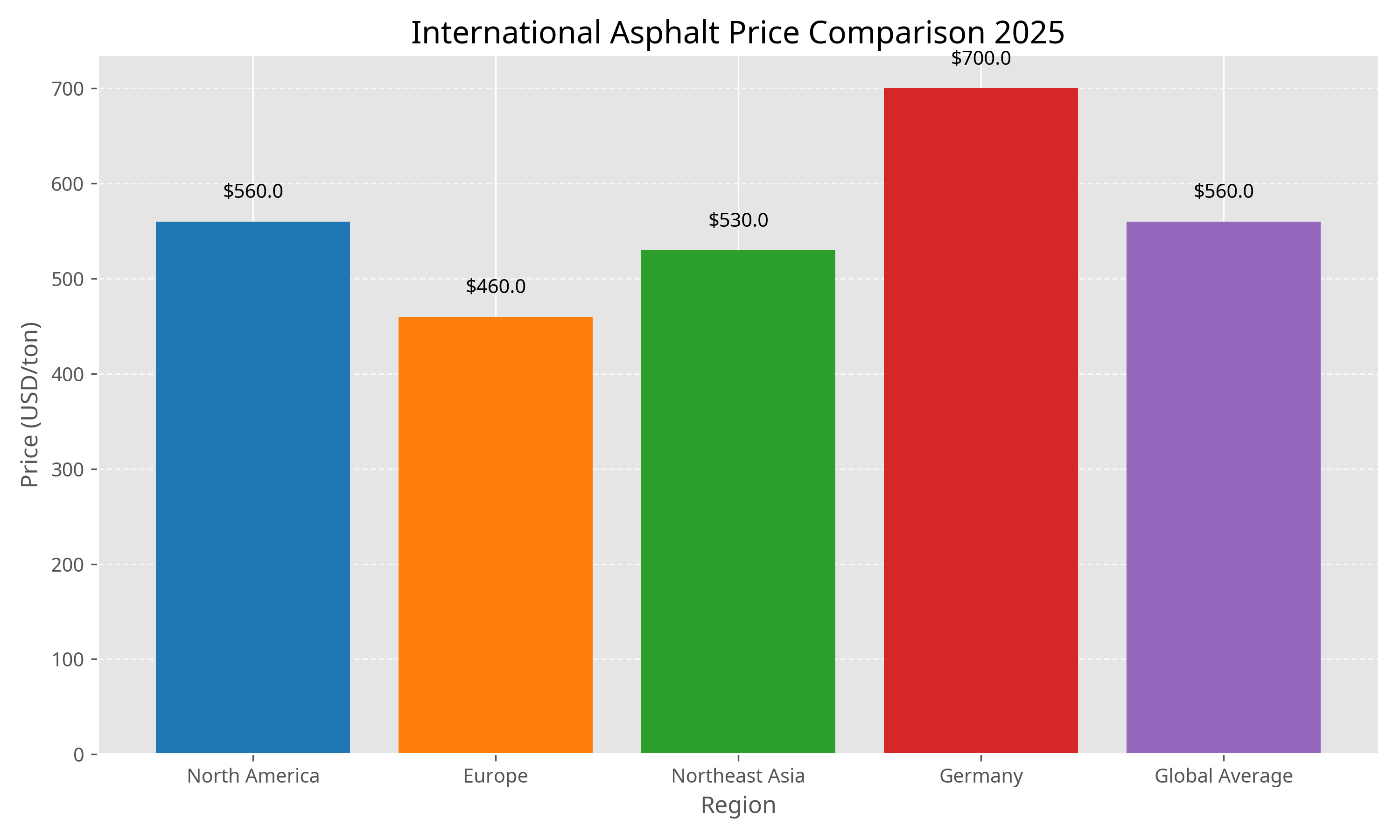
Asphalt pricing is local, time-sensitive, and easy to misread. A state binder index, a plant quote for finished mixture, and a contractor’s installed square-foot price measure different things. This guide explains how to use 2025 data without turning unlike numbers into a false national average.
Data date: The examples and linked indexes refer to 2025. Use them for historical context and estimating method, then obtain current local prices before budgeting or contracting work.
The four prices people call “asphalt cost”
| Price type | What it represents | What it usually omits |
|---|---|---|
| Binder index | A contract-adjustment reference for liquid asphalt | aggregate, plant production, freight, placement |
| Plant mix quote | Finished asphalt mixture at or from a plant | site work, paving crew, base, risk |
| Material-only tonnage | Estimated tons multiplied by a quoted unit price | most installed-project costs |
| Installed price | A contractor’s scope for a particular site | work excluded by that proposal |
The unit alone does not make prices comparable. Always record product, location, date, quantity, delivery terms, and inclusions.
Reading state asphalt indexes correctly
New Jersey DOT publishes asphalt cement and fuel price indexes used in contract administration. Maryland and other jurisdictions publish their own references. These are useful signals for binder movement, but they should not be described as the retail price of HMA or the cost of a driveway.
When an index rises, a mix or contract price may also rise, but not necessarily by the same percentage. Aggregate, fuel, labor, plant utilization, freight, contract clauses, and competition affect the final number.
Why prices vary by region
Plant and haul distance
Hot or warm mix must arrive within a workable temperature and time window. Longer hauls add trucks, fuel, driver time, and scheduling risk. A remote project can cost more even when its nearest binder index is lower.
Mix specification
Binder grade, polymer modification, aggregate source, RAP allowance, testing, and production requirements affect cost. “Asphalt” is not one standardized retail product.
Project size and access
Small projects carry mobilization and minimum-load costs across fewer square feet. Tight access, handwork, staging, and traffic control can dominate the price even when material quantity is modest.
Existing conditions
Demolition, disposal, unsuitable soil, drainage, utility adjustments, leveling, and base repair are often more variable than the surface mixture itself.
Season and capacity
Plant schedules, public-work demand, weather windows, labor availability, and regional construction cycles affect quotes. “Off-season discount” should not be assumed when weather prevents proper placement.
How to build a defensible 2025 estimate
Step 1: calculate quantity
Use measured area, compacted thickness, and a documented density. The asphalt calculator guide explains the formula and a worked example.
Step 2: request a comparable material quote
Ask for:
- Mixture designation
- Price unit and quantity tier
- Plant pickup or delivered terms
- Delivery location and estimated freight
- Tax and environmental fees
- Quote date and validity period
Step 3: itemize installed work
Separate removal, excavation, base, drainage, asphalt, mobilization, traffic control, testing, permits, overhead, and contingency. For residential work, the driveway cost calculator analysis provides a worksheet.
Step 4: compare scenarios
Use a low, expected, and high scenario tied to actual scope differences. Do not create a broad range by mixing material-only and installed-cost sources.
Crude oil is not a one-variable price formula
Asphalt binder comes from petroleum refining, so crude markets and refinery decisions matter. But claims such as “a 1% oil increase causes exactly a 0.7% asphalt increase” are not reliable as a universal budgeting rule. The relationship changes with refinery configuration, regional supply, inventories, transportation, and contract timing.
Use published binder indexes and supplier quotes instead of applying a fixed crude-oil multiplier.
Recycled asphalt pricing needs a product definition
“Recycled asphalt” can refer to:
- RAP used as a component in a plant-produced mixture
- Processed asphalt millings sold as an unbound surface
- Cold-recycled or in-place recycling processes
Their prices and engineering roles are not comparable. A low price for millings should not be presented as the price of a finished structural asphalt mixture. FHWA guidance treats RAP as a characterized input to mix design, not automatically a budget-grade substitute.
Maintenance and lifecycle costs
Installed cost is only the first cash flow. Crack treatment, localized repair, surface treatment, overlay, or reconstruction may occur later depending on traffic, climate, drainage, construction quality, and condition.
FHWA Life-Cycle Cost Analysis compares alternatives over a common period with explicit timing and discount assumptions. For a homeowner, the simpler lesson is to avoid a rigid nationwide maintenance calendar and inspect condition regularly. See the driveway ownership-cost guide.
Quote-comparison checklist
- Same project limits and measured area
- Same removal and disposal scope
- Same base material and compacted depth
- Same asphalt mix and compacted thickness
- Drainage and transition details included
- Material quantity and overrun terms stated
- Mobilization, freight, tax, and permits stated
- Price date and validity period stated
- Warranty scope and exclusions stated
Sources
- New Jersey DOT Asphalt Cement and Fuel Price Indexes
- Maryland Asphalt Association Asphalt Index
- FHWA Life-Cycle Cost Analysis
- FHWA: Reclaimed Asphalt Pavement in Asphalt Mixtures
- NAPA Asphalt Pavement Facts
The most useful “current price” is a dated quote for the correct product and scope in the actual project market. Everything else is context.